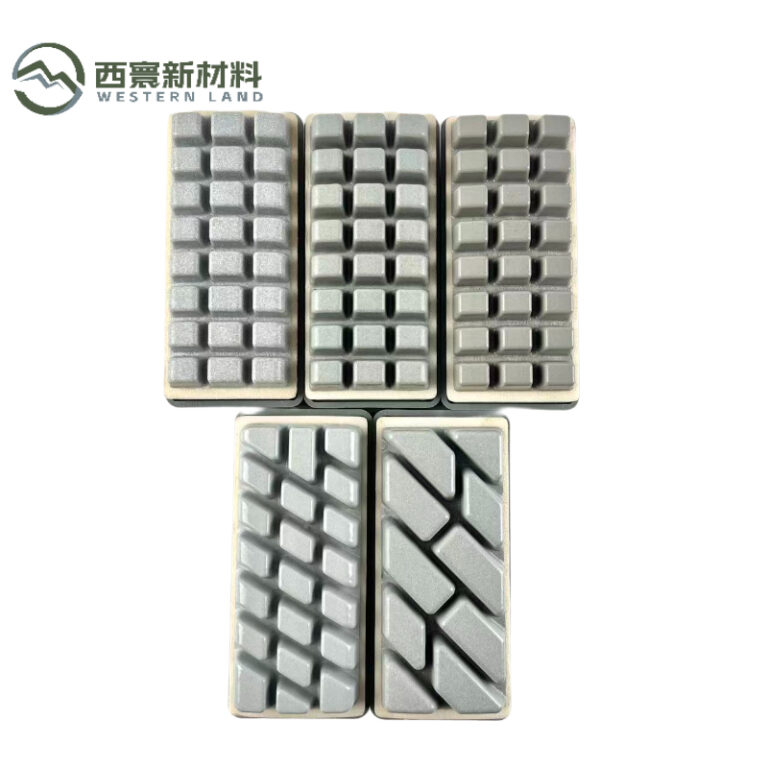
Flexible Fickert — Elastic Resin Fickert for Lappato Finishing
Factory-direct flexible Fickert (elastic resin Fickert) in L140 / L170 with 12 grit grades from 120# to 3000#. Built for porcelain, glazed, and full-body tile lines running the Lappato soft-matte / semi-gloss finishing stage — conforms to the surface, no burning, no scratching on glaze. OEM / ODM supported.
Product Overview
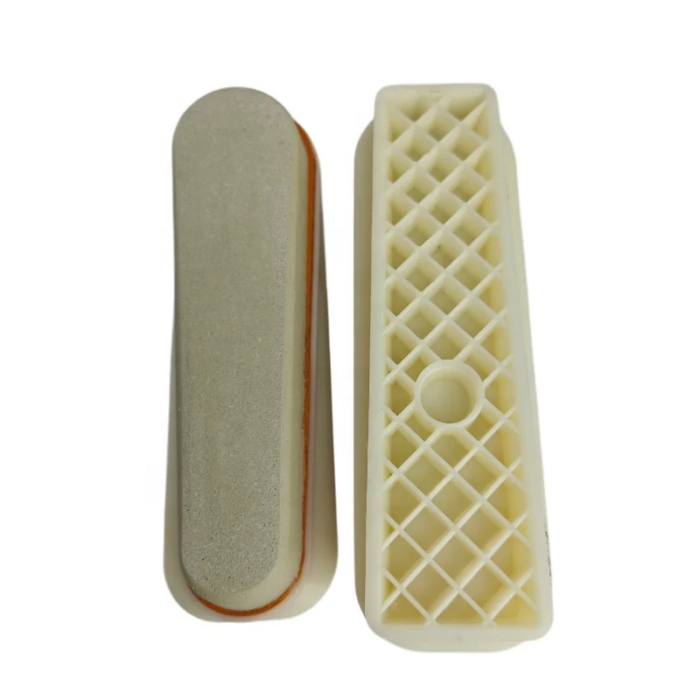
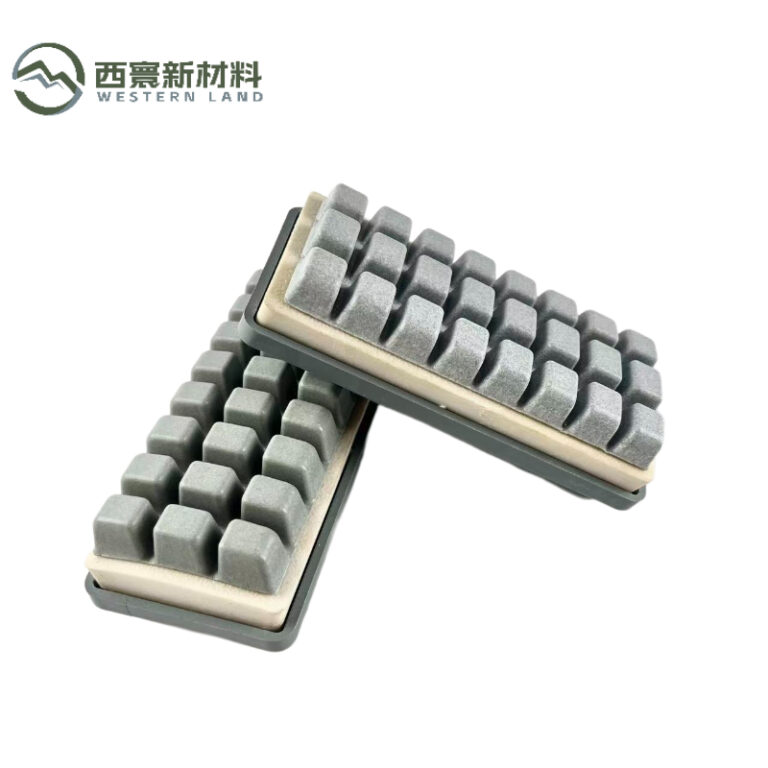
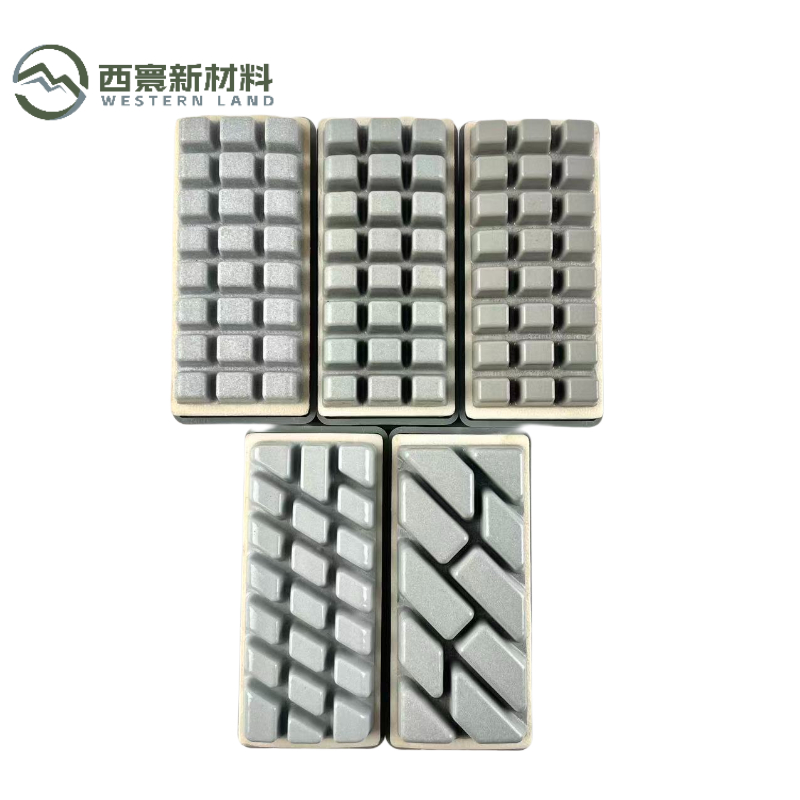
A flexible Fickert (also sold as an elastic resin Fickert or elastic polishing block) is the workhorse tool of the Lappato finishing stage in a modern tile factory. After the tile has been cut, ground, and glazed, it goes onto a floating-head polishing line where a series of progressively finer Fickerts take the glaze from harsh to a soft, low-gloss, velvety surface — the Lappato / semi-matte / semi-gloss look that sells premium tile.The word that matters here is “flexible”. A rigid block on a floating head sits on three points, so on a slightly warped or crowned tile it concentrates pressure on those three points — producing burn marks, swirl patterns, and a non-uniform gloss across the face. An elastic resin Fickert has a rubbery backing that conforms to the tile surface, spreading the load evenly across the whole face. Same pressure, uniform result.Available in L140 and L170 shapes with 12 grit grades (120# to 3000#), so one product covers the whole Lappato sequence — from the first 120# cut-down after coarse grinding, through the 400#–800# intermediate stages, to the final 1200#–3000# gloss. Designed for automatic ceramic tile polishing lines.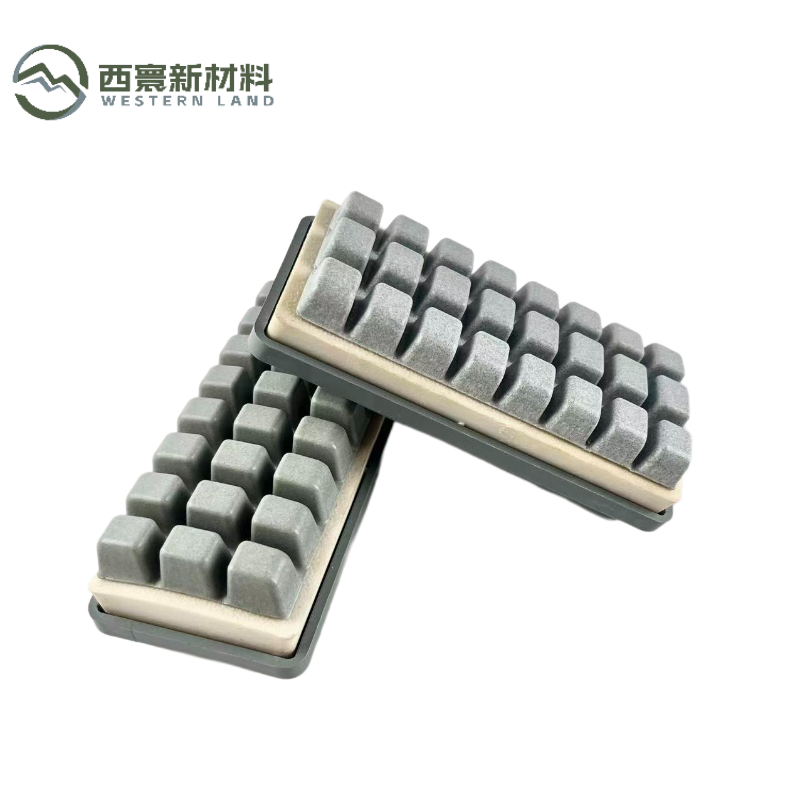
6 Customer Pain Points We Solved
No Burning, No Swirls on the Glaze
Rigid polishing blocks on a floating head concentrate pressure on three contact points, and that focused heat is what causes burn marks, dark swirl patterns, and a gloss that reads uneven across the face — the single most common reject reason on a Lappato line. Our elastic resin backing conforms to the tile surface, spreading the load across the entire face, so the glaze finishes evenly with no burn and no swirl.No Scratching on the Glaze Layer
Glaze is glass. It sits proud of the ceramic body and is far more damage-sensitive than the biscuit underneath. A block with loose, sharp, or unevenly-bonded diamond will scratch the glaze — and glaze scratches cannot be polished out without taking the whole surface down. Our diamond blocks are firmly bonded in a controlled pattern with no loose grit, so the glaze stays intact through the whole 12-grit sequence.12 Grit Grades, One Complete Lappato Sequence
Buyers running Lappato usually get caught with three or four suppliers and mismatched grits that do not step down cleanly — the classic failure is jumping from 400# straight to 1200#, which leaves visible 400# scratches under the final gloss. We supply the full 120# → 3000# range so every step transitions correctly and the final surface is genuinely clean.Good Surface Conformity on Warped Tile
Ceramic bodies warp slightly in the kiln — bow, cup, and crown are normal on a fired tile. A rigid block cuts high spots only and leaves the low areas untouched, so the gloss never becomes uniform. The elastic Fickert body flexes to follow the actual surface contour, so the whole tile face receives the same treatment, and the finished gloss matches across the batch.Machine Compatibility — Drops Into Existing Lines
The Fickert format is the industry-standard mount for automatic ceramic tile polishing lines — the blocks clamp onto the floating-head carriers already running your plant. No machine modification, no new polishing station, no downtime. Same carrier, same spindle, same production speed — only the consumable changes.OEM / ODM — Your Brand, Your Format
Western Land builds this in L140 and L170 and supports full OEM / ODM: custom grit sequences, block patterns, backing hardness, colors, and private-label printing — plus bonded warehouse programs so you can run a full Lappato consumable program under your own brand. Contact us for a quote.Key Features
- Elastic Resin BondRubbery backing conforms to the tile surface — even pressure, even gloss.
- No Burning / No Scratching on GlazeSpread load eliminates the dark swirl and burn marks rigid blocks cause.
- 12 Grit Grades: 120# – 3000#The complete Lappato sequence from cut-down to final gloss, in one supplier.
- L140 & L170 SizesTwo standard carrier formats covering most automatic polishing lines.
- Firmly Bonded Diamond BlocksNo loose grit, no glaze scratching, consistent cut rate per block.
- OEM / ODM SupportedCustom grit sequences, patterns, colors, and private-label packaging.
Specifications
| Product Name | Flexible Fickert / Elastic Resin Fickert (弹性磨块) |
|---|---|
| Product Type | Flexible resin-bonded diamond Fickert polishing block |
| Size | L140 / L170 |
| Bond Type | Elastic Resin Bond |
| Grit Available | 120#, 180#, 240#, 320#, 400#, 600#, 800#, 1000#, 1200#, 2000#, 3000# |
| Application | Porcelain Lappato tile, glazed tile, antique ceramic tile, relief / undulated glazed tile |
| Process Stage | Lappato soft matte & semi-gloss finishing (after rough grinding, before waxing) |
| Machine Compatibility | Automatic ceramic tile polishing line |
| Key Feature | Elastic body, good surface conformity, no burning / scratch on glaze |
| MOQ | Negotiable, sample available |
| Service | OEM supported |
Available Grit Grades
120#
180#
240#
320#
400#
600#
800#
1000#
1200#
2000#
3000#
Grit range 120# to 3000# in 11 stocked grades (spec sheet lists 12 grit options including 1000# and 1200# separately). MOQ negotiable, samples available. OEM supported.
Reading the grit table: Lower number = coarser cut, removes material faster (120# is the aggressive cut-down stage). Higher number = finer finish, brighter gloss (3000# is the final polish before waxing). The 600# grade highlighted above is the most common first-step grade on many Lappato lines. Do not skip steps — jumping straight from 400# to 1200# leaves the coarser scratches visible under the final gloss.
What Is a Flexible Fickert?
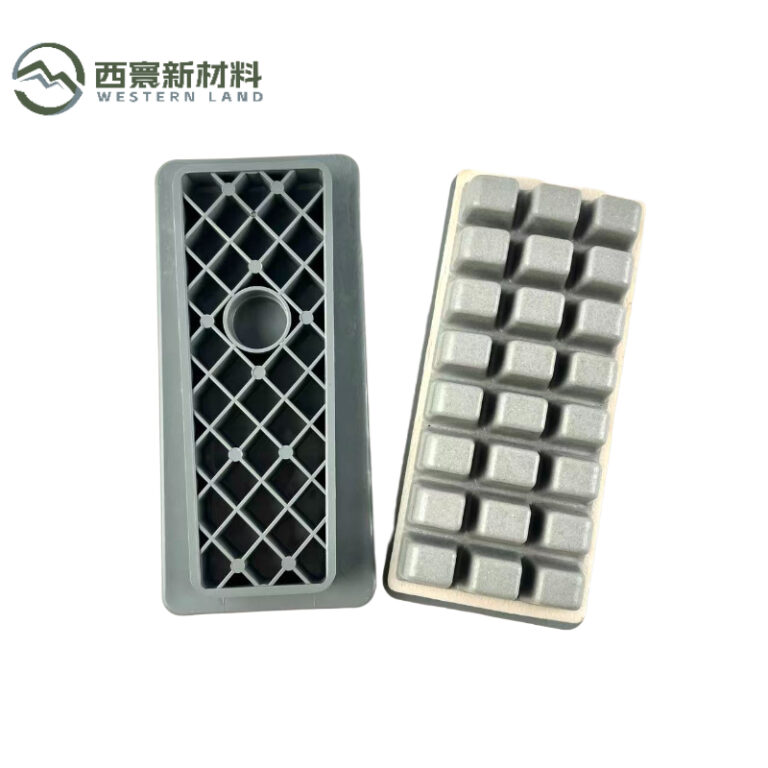
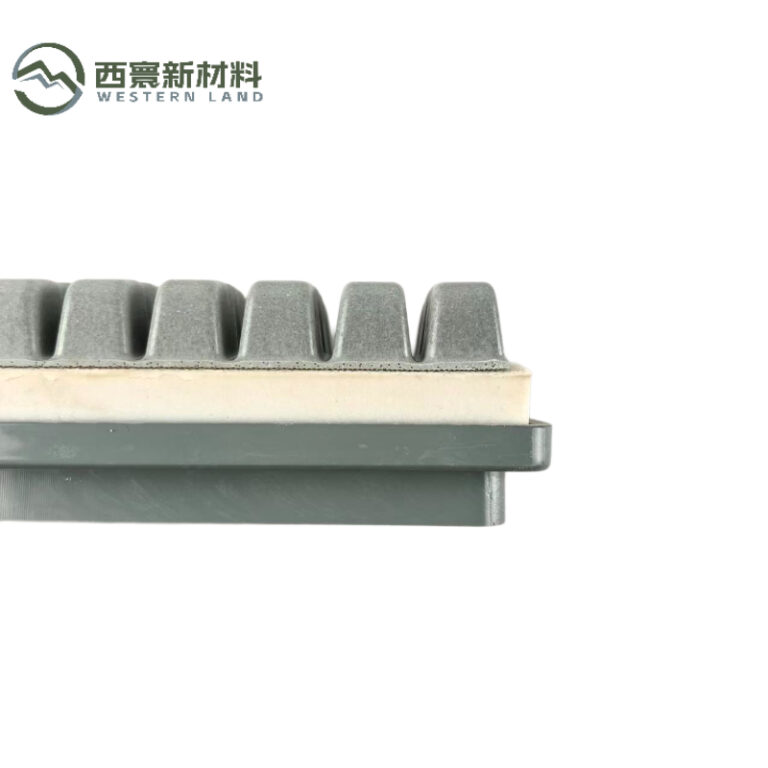
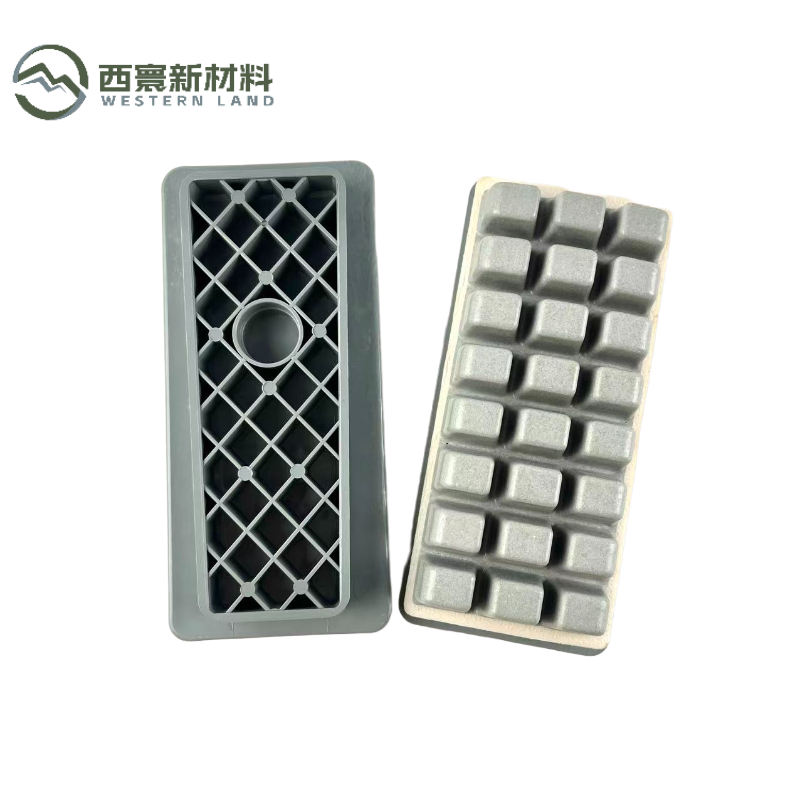
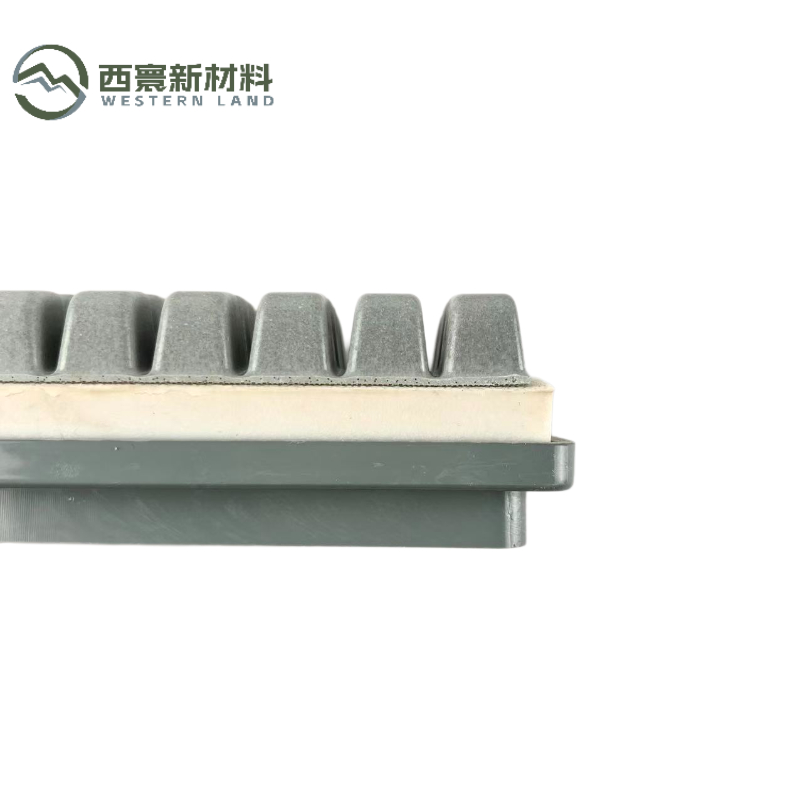
A Fickert is a rectangular polishing block made of small diamond segments bonded to a backing. It is named after the Fickert company, which pioneered the format, and it has become the universal polishing consumable for ceramic tile — used on both floating-head polishing lines and manual single-head grinders.What makes a Fickert flexible is the backing. Three generations exist:- Rigid resin Fickert — a hard, solid block. Cheapest, but burns and swirls on glazed surfaces because the load concentrates on a few contact points.
- Rubber-backed Fickert — a rubber pad under a resin segment layer. Better conformity, common in general-purpose applications.
- Elastic resin Fickert — the whole body is a flexible elastic resin carrying the diamond segments. Maximum conformity, maximum surface quality, and the standard choice for Lappato glaze finishing.
The Lappato Process — Where This Block Sits
A modern tile line has a fixed sequence, and the Fickert only appears at one specific point in it:1
Cut & grind
Diamond saw blade, then coarse grinding wheels take the edge and the face flat
2
Glaze
Frit or glaze is applied, then the tile goes into the kiln and is fired
3
Lappato polish
Floating-head line, elastic Fickert steps the glaze from harsh to soft matte / semi-gloss
4
Wax & pack
Protective wax, then packing and palletising for shipment
Why Elastic Conformity Matters So Much on Glaze
This is the single most important thing to understand about Lappato finishing, and it comes down to pressure and heat:- A rigid block contacts the tile at three points. Floating heads are designed to move the block across the surface while the pressure stays concentrated.
- Friction at those three points generates local heat. On a glassy glaze surface, that heat is enough to burn the glaze locally — a dull, darkened, rough patch that looks like a swirl mark and cannot be polished out.
- An elastic block spreads the contact over the whole face. The same total pressure, but spread across many times the area — so the temperature stays low and the glaze is cut evenly instead of burned at three points.
Choosing the Right Grit Sequence
Grit selection is the operator’s decision, but the sequence should always step down gradually. A proven Lappato sequence on porcelain and glazed tile:- 120# – 320# — the cut-down stage. Removes the coarse grinding marks left by the previous step. Runs at lower line speed and higher pressure.
- 400# – 800# — the intermediate stage. Takes the scratch pattern from coarse to fine. 600# is the most commonly used starting grade on many lines.
- 1000# – 1200# — the refining stage. The surface starts to close up and the gloss begins to appear.
- 2000# – 3000# — the final polish before waxing. Produces the soft, low-gloss, velvety Lappato surface.
Which size do I need — L140 or L170? Both are standard Fickert formats used on automatic polishing lines. L140 is the more common size on single-head and smaller multi-head machines, while L170 is used on larger multi-head lines with bigger carriers. Send us your machine model and head count and we’ll confirm the right size for your line.
Contact us for machine matching →
How to Get the Best Lappato Finish
- Start from a properly ground surface. The Fickert removes glaze, not grinding marks. If the previous step left deep scratches, no grit sequence will fix it.
- Never skip a grit step. Each grade must fully remove the previous grade’s scratch pattern. Skipping is the number one cause of a tile that looks scratched under gloss.
- Use water and keep the block wet. Dry polishing on glaze burns it. The slurry also carries grit away and stops the block from loading up.
- Check the block for wear and sharpness regularly. A worn block stops cutting and starts burnishing — the gloss goes dull and streaky. Rotate blocks in a controlled pattern so the whole set wears evenly.
- Keep the carriers clean. Grit and glaze debris trapped under a block causes the classic uneven-swirl defect.
- Always finish with wax. Wax is the final protection and the final appearance layer. Wax will not hide defects — which is why step 3 has to be right.
Recommended Applications
- Porcelain Lappato tile — the primary use, producing the soft matte / semi-gloss finish
- Glazed tile (polished / full-body) finishing after the kiln
- Full-body porcelain (通体砖) surface finishing
- Polished-glazed tile (抛釉砖) glaze refinement
- Antique ceramic tile — the soft, textured antique look
- Relief / undulated glazed tile where the profile is not flat
- Automatic ceramic tile polishing lines — floating-head and multi-head machines
- Tile factories running 100,000–1,000,000+ m² of Lappato finish per month
- OEM private-label for polishing-line builders and consumable distributors
Pair With Other Western Land Tools
The Lappato stage is only one step in a tile line, and the step right before it is where most of the material comes off. Western Land Tools supplies the full chain:Contact us for full line specs Fiber Abrasive Block L140 Rubber Abrasive Brush L140 200mm Ceramic Green Body Saw BladeFor background on the ceramic material, its glaze chemistry, and how surface finishes such as matte and gloss are produced, see this external reference on ceramic material and its forming and firing processes.Frequently Asked Questions
What is a flexible Fickert?
A flexible Fickert — also called an elastic resin Fickert or elastic polishing block — is a rectangular diamond polishing block whose entire body is a flexible elastic resin carrying bonded diamond blocks. The flexibility lets it conform to the tile surface so the load is spread evenly, which is what prevents burn marks and swirl on glazed surfaces. It is the standard consumable for the Lappato finishing stage on ceramic tile polishing lines.What is Lappato finishing and where does this block fit?
Lappato is a surface finish that gives glazed or full-body tile a soft matte, semi-gloss, low-gloss velvety appearance rather than a mirror gloss. It is achieved by progressively polishing the fired glaze with a sequence of diamond Fickerts on a floating-head polishing line. This block performs that polishing step only — it runs after rough grinding and before waxing.Why does burn marking happen, and how does the elastic body prevent it?
A rigid block on a floating head contacts the tile at only three points. Friction at those points creates concentrated local heat, and on a glassy glaze surface that heat burns the glaze locally, leaving a dull darkened patch that reads as a swirl mark. An elastic resin body flexes to follow the actual tile contour, spreading the same total pressure across a far larger contact area — so the temperature stays low, the glaze is cut evenly, and no burn or swirl appears.What sizes and grit grades are available?
Two standard sizes: L140 and L170. Grit range is 120#, 180#, 240#, 320#, 400#, 600#, 800#, 1000#, 1200#, 2000#, and 3000#. Lower numbers cut faster (120# is the cut-down grade), higher numbers produce the final gloss (3000# is the last step before waxing). We can also supply custom grit sequences as part of an OEM program.How do I choose the right grit sequence for my tile?
Use a gradual step-down and never skip a grade. A proven sequence on porcelain and glazed tile is 120#–320# for the cut-down, 400#–800# for the intermediate stage, 1000#–1200# to refine and start the gloss, and 2000#–3000# for the final polish before waxing. 600# is the most common first-step grade on many Lappato lines. If you skip a step, the coarser scratches stay visible under the final gloss.Will this Fickert fit my polishing line?
In most cases yes, with no machine modification. The Fickert format is the industry-standard mount for automatic ceramic tile polishing lines — the blocks clamp onto the floating-head carriers already running your plant. L140 is the more common size on single-head and smaller multi-head machines; L170 is used on larger multi-head lines. Send us your machine model and head count and we’ll confirm the right size.Can this Fickert be used on antique and relief-glazed tile?
Yes. Antique ceramic tile and relief / undulated glazed tile are both listed applications. On relief and undulated profiles the elastic conformity is actually a bigger advantage than on flat tile — the block follows the texture instead of only touching the high points, so the relief is polished without cutting it down.How do I know when a Fickert needs replacing?
Three signals: the gloss goes dull or streaky instead of improving, the block stops cutting and starts burnishing, and you see uneven wear across the set where some blocks are noticeably smoother than others. A worn block that is left in service will burn the glaze rather than cut it. Rotate blocks in a controlled pattern so the set wears evenly, and keep matched spares on the line.What is the MOQ and can I get samples?
MOQ is negotiable and samples are available. For trial we can supply a mixed-grit sample set so you can validate the full sequence on your own tile before committing to a production quantity. Contact us for sample pricing.Do you offer OEM / ODM for flexible Fickerts?
Yes. OEM is supported, including custom grit sequences, block patterns, backing hardness, colors, private-label printing, and bonded warehouse programs — so you can run the entire Lappato consumable program under your own brand. Contact us with your target gloss level and monthly volume.Need a quote, a sample set, or a custom grit sequence for your Lappato line?
Send us your machine model, head count, tile type, and monthly volume — we’ll spec the right size and grit ladder and respond within 24 hours. Contact Western Land Tools →