
Ceramic Green Body Saw Blade — Diamond Blade for Unfired Tile Cutting
Factory-direct ceramic green body saw blade with ultra-thin continuous rim and steel body. Purpose-built for cutting green body (unfired / biscuit) ceramic tile before glazing — clean edges, minimal chipping, no glaze cracking. Model HRT20041. OEM / ODM supported.
Product Overview
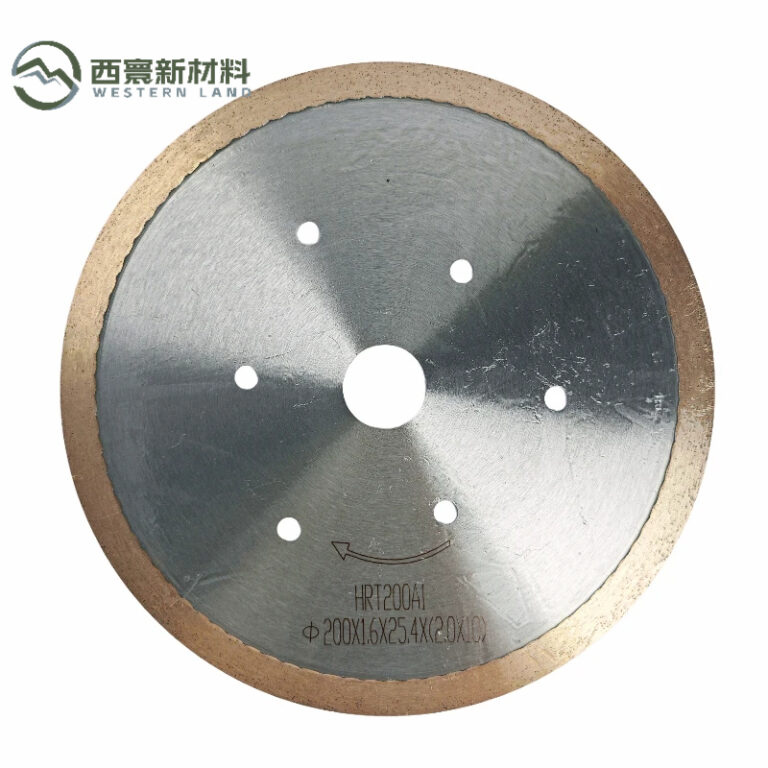
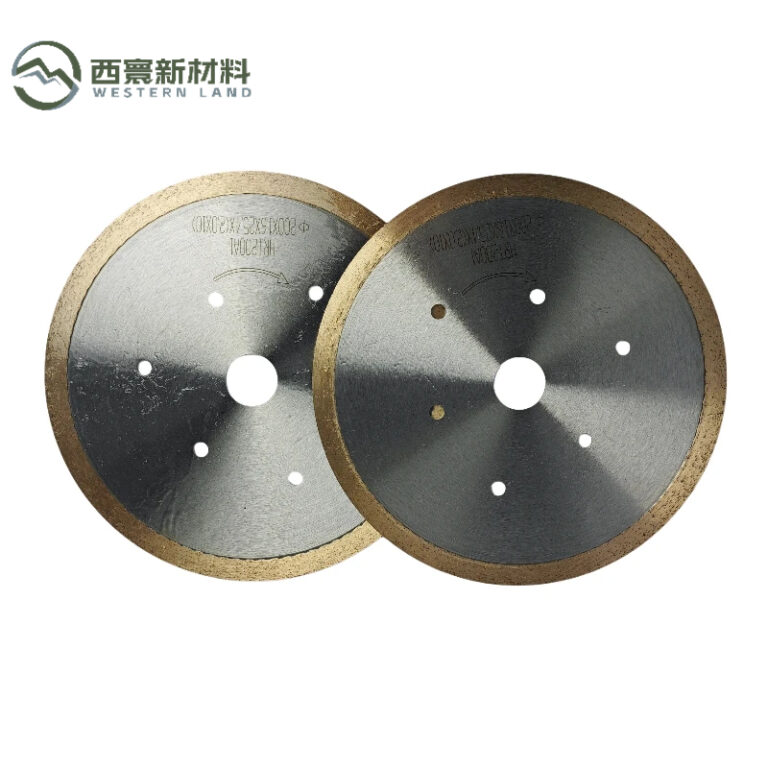
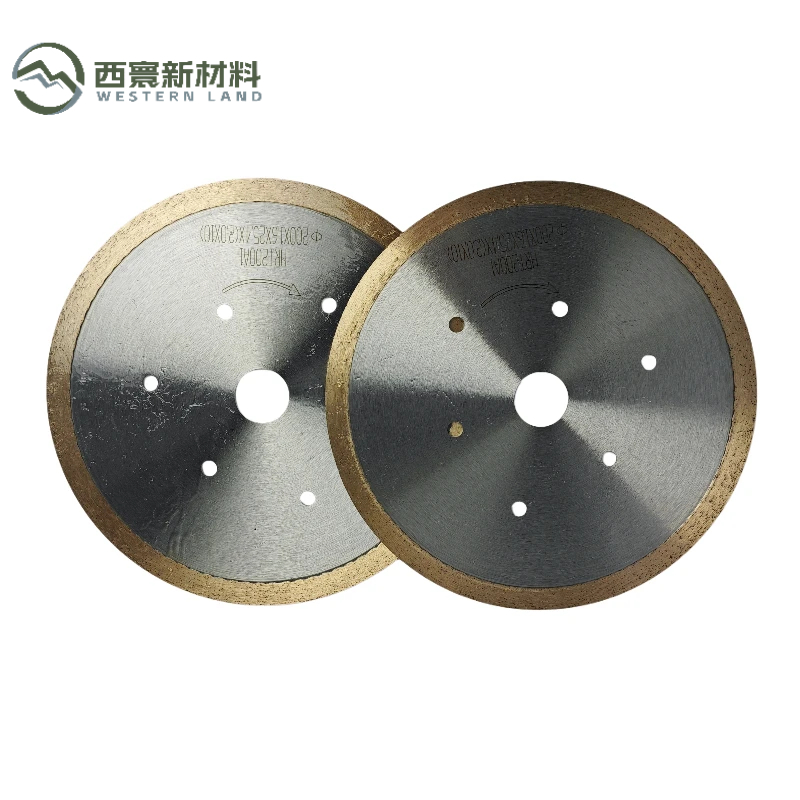
Ceramic green body (also written as green body tile, unfired tile, bisque tile, or raw ceramic tile) is the tile before it goes into the kiln. At that stage it is soft, unfired, and still carries press dust from the forming press. Almost every ceramic tile you have ever seen was cut at this stage — green body cutting is the very first operation in a tile production line.Cutting green body looks easy, and that is exactly the trap. Green body is far softer than fired porcelain, so a blade that is “too good” for the job will flex, chatter, and deflect, throwing an edge that is out of square. Meanwhile a blade that is too aggressive will crack or crumble the unfired edge, and every one of those cracked tiles goes straight to the reject bin — before a single one is fired.This ceramic green body diamond saw blade solves that with a 1.6 mm ultra-thin continuous rim (the thinnest practical kerf, so almost no material is wasted), a continuous rim profile with no segment gaps (so the edge stays clean and does not chip), a 6-bolt steel body (so it fits standard ceramic cutting machines), and a hardened, stamped-steel core that resists the flex that ruins cheap blades. Designed specifically for the green body stage, not a repurposed wet tile blade.BLADE MARKING AS SHIPPED
HRT20041
Φ 200 × 1.6 × 25.4 × (2.0 × 1.0)
5 Customer Pain Points We Solved
No Crumbling, No Cracked Green Body Edges
Green body is unfired and structurally weak — a rigid, aggressive blade cracks, crumbles, and chips the edge, and a cracked green body tile will explode in the kiln, not just fail inspection. Our rim is engineered with a finer, softer diamond grade and a continuous profile so the blade shears the green body cleanly instead of hammering it. Higher green body yield, fewer kiln losses.Thin Kerf — Almost Zero Material Waste
Every extra millimetre of kerf is raw material you paid for and threw away. A standard 2.2–3.2 mm blade eats 30–50% more material per cut than this 1.6 mm ultra-thin rim. On a tile factory cutting hundreds of thousands of pieces a month, kerf reduction is one of the single largest material-cost savings available — and thinner cuts mean less pressure on the press-formed body, so fewer rejects.Rigid Steel Body — No Flex, No Chatter
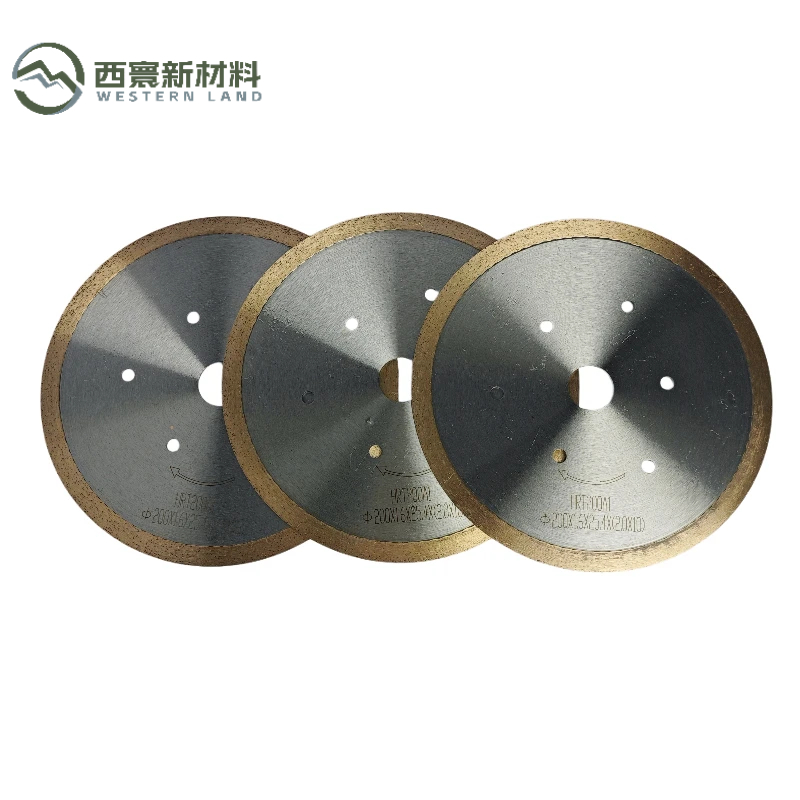
Because green body is soft, the blade flexes under load and chatters — that is what produces an out-of-square, tapered edge that will not glaze or fit properly. A stiff, hardened steel body with a 6-bolt clamping pattern holds the blade dead flat under cut load, so the edge you cut in the green body stage is the edge you get out of the kiln.Standard 25.4 mm Bore — Fits Your Existing Machine
The 25.4 mm (1 inch) bore and 6-bolt pattern is the standard mount on ceramic green body cutting machines worldwide. This blade drops straight onto your existing machine — no adapter, no re-spindle, no new tooling, no downtime waiting for a special order.Continuous Rim — No Segment Lines on the Edge
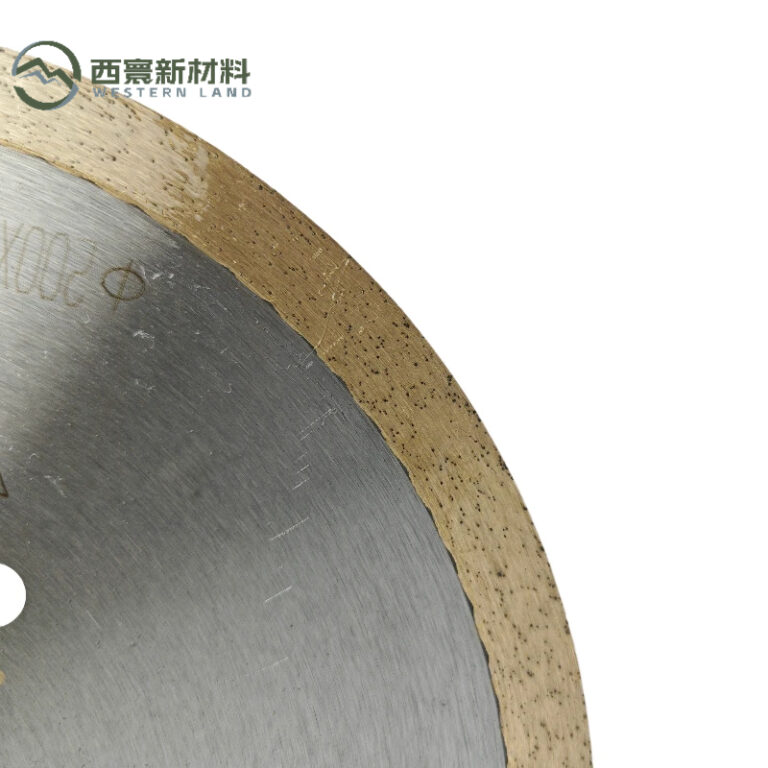
A segmented rim leaves small gaps between segments, and on soft unfired material those gaps pick out chips and leave a scalloped, striped edge. This blade uses a continuous rim — an unbroken diamond edge all the way around — so the cut edge is smooth and clean for glazing, fritting, or straight to press.Key Features
- Built for Green Body, Not Fired TileDiamond grade and rim profile tuned for soft, unfired ceramic — not a repurposed wet tile blade.
- Ultra-Thin Continuous RimMinimal kerf means almost no wasted material and lower pressure on the unfired body.
- Rigid 6-Bolt Steel BodyStiff, hardened steel core with a 6-bolt pattern — holds the blade flat, no flex, no chatter.
- Continuous Rim, No GapsUnbroken diamond edge leaves a smooth, scallop-free surface ready for glazing and fritting.
- 25.4 mm (1″) Standard BoreUniversal fit on ceramic green body cutting machines — no adapters, no machine changes.
- Rotation Direction Marked on the BladeDirection arrow is stamped on the body so operators cannot mount it backwards.
Specifications
| Product Name | 200mm Ceramic Green Body Saw Blade (200mm 陶瓷生胚锯片) |
|---|---|
| Model | HRT20041 |
| Product Type | Diamond saw blade for ceramic green body (unfired tile) cutting |
| Diameter | Customized |
| Kerf / Rim Thickness | 1.6 mm |
| Bore Diameter | 25.4 mm (1 inch) |
| Rim Height | 2.0 mm |
| Rim Type | Continuous rim |
| Body | Steel body, 6 mounting bolt holes |
| Cutting Mode | Dry cutting of unfired ceramic body |
| Abrasive | Diamond, grade tuned for soft unfired ceramic |
| Rotation Direction | Marked on blade body |
| Application | Ceramic tile green body cutting, bisque tile trimming, unfired tile sizing |
| Service | OEM / ODM supported |
Other specifications are available on request. Custom diameters, bores, and bolt patterns are available for OEM orders.
Reading the table: Diameter is the outside blade diameter — which is the standard size on most ceramic green body cutting machines. Kerf is the width of material the blade removes; at 1.6 mm this is an ultra-thin cut, which saves material and reduces pressure on the unfired body. Bore is the center hole — 25.4 mm (1 inch) is the industry standard. Rim height is the depth of the diamond rim above the steel body — a deeper rim means more usable life. Bolt holes is the mounting pattern. Rim type distinguishes a continuous rim (no gaps, smooth edge) from a segmented rim.

What Is Ceramic Green Body Tile?
Understanding the material is the key to buying the right blade, because green body behaves nothing like finished tile.In a ceramic tile factory the process runs: press the powder into a body → dry it → cut / trim it to size → glaze or frit → fire it in the kiln → grind and polish if glazed. The tile at the “cut to size” stage is called the green body (also unfired tile, bisque, or raw tile) — it is unfired clay pressed to shape, still carrying moisture and press dust.Why green body needs a dedicated blade
- It is much softer than fired tile. Fired porcelain reaches Mohs 7–8. Green body is closer to Mohs 2–3 — softer than most metals. A blade designed for hard fired porcelain will flex, chatter, and bounce on it.
- It damages easily. Green body edges crack, crumble, and chip with very little force. Those defects do not show up until after firing, which means the kiln reveals them and the whole batch is lost.
- Kerf matters more. Because the material is uniform and unfired, a thin kerf saves a lot of body material with no downside — the standard trick in ceramic manufacturing.
- Dust is the enemy. Press dust from the body plus ceramic dust from the cut quickly glazes the rim and stops the blade cutting. Rim design and cleaning discipline are critical.
The real cost of a bad green body cut. A blade that rips a chipped edge on unfired tile produces a reject that is only discovered after the kiln — you have already paid the full energy cost of firing the batch. Because of this, green body yield is where a tile factory’s real profit margin is won or lost. This is not an accessory purchase; it is a production-critical tool.
Why a Continuous Rim Beats Segments on Green Body
Most diamond blades are segmented — separate diamond blocks brazed onto the steel core with small gaps between them. The gaps make the edge scalloped, which is fine on hard material but causes two specific problems on soft green body:- Chipping in the gaps. The scalloped profile acts like a row of small cutting tips that pick chunks out of the soft unfired edge instead of shearing it.
- More pressure needed. The gaps mean less contact area, so the machine has to push harder — and more push on soft unfired material means more flex, more chatter, and more risk of cracking.
How to Get the Best Green Body Cut
- Check the rotation direction before you mount. The arrow is stamped on the blade body. Mounting it backwards will wear the rim in minutes and can damage the machine.
- Never run a green body blade on fired or glazed tile. Green body is soft; a soft-body blade on hard porcelain will warp and glaze instantly. Keep this blade dedicated to the unfired stage.
- Use enough pressure — but never force it. Green body needs only light, steady pressure. Pushing hard forces the soft body to flex, which causes chatter and an out-of-square edge.
- Keep the blade clean. Wipe or blow off ceramic dust frequently. A dust-loaded rim glazes over, stops cutting, and starts burning the edge. Clean blade, clean cut.
- Watch the rim height. Replace the blade when the diamond rim has worn down to roughly 0.5 mm above the steel body. A worn rim produces a rough, tapered edge that shows up in the fired tile.
- Wear proper protection. Cutting ceramic generates fine silica dust. Use dust extraction and a respirator — the dust from green body is not the same as wet slurry and is a real health concern.
Recommended Applications
- Ceramic tile green body cutting — the primary use, trimming the unfired body to final size before glazing
- Bisque / unfired tile trimming on the line before the kiln
- Ceramics and terracotta unfired body sizing
- Roof tile production — clay and ceramic roof tile body cutting
- Sanitary ware production — unfired ceramic sizing before firing
- Refractory brick and clay products unfired body cutting
- Terracotta and quarry tile lines running thin-kerf cuts
- Ceramic tile factories running 100,000–1,000,000+ pieces per month
- OEM private-label for ceramic machinery manufacturers and tool distributors
Pair With Other Western Land Tools
Green body cutting is the first step in a ceramic tile line. For the stages that come after firing, Western Land Tools supplies:Contact us for full line specs Diamond Squaring Wheel (Dry Grinding) Segmented Diamond Squaring Wheel Laser Welded Marble Saw BladeFor background on the ceramic manufacturing process and why unfired bodies behave differently from fired tile, see this external reference on ceramic material and how it is formed and fired.Frequently Asked Questions
What is ceramic green body tile?
Ceramic green body tile — also called unfired tile, bisque tile, or raw tile — is ceramic that has been pressed into shape but not yet fired in a kiln. Every ceramic tile is cut at this green body stage before glazing and firing. Because it is unfired, it is much softer than finished tile (closer to Mohs 2–3) and it damages far more easily, which is exactly why it needs a dedicated blade.Why can’t I just use a regular tile saw blade to cut green body?
A regular fired-porcelain blade is too rigid and too aggressive for soft unfired material. It will flex, chatter, and bounce, producing an out-of-square edge, and it may chip or crumble the unfired edge. Those defects are often invisible until after the kiln fires the batch, so the whole run can be lost. A dedicated green body blade uses a finer diamond grade and a continuous rim so it shears the soft body cleanly.Will this blade fit my ceramic cutting machine?
The standard mount for ceramic green body cutting machines is a 25.4 mm (1 inch) bore with a 6-bolt pattern, which is exactly what this blade has. Measure your spindle bore before ordering — if it is 25.4 mm it mounts directly with no adapter. Custom bores and bolt patterns are also available for OEM orders. Send us your bore size and we’ll confirm the fit.Why use a continuous rim instead of a segmented blade on green body?
A segmented rim has gaps between the diamond segments. On hard fired material this is fine, but on soft unfired green body those gaps act like small cutting tips that pick chips out of the edge and create a scalloped, striped surface. The gaps also reduce contact area so the machine must push harder, which increases flex and chatter. A continuous rim shears the soft material smoothly and needs less pressure.Can I use this blade on fired or glazed tile?
No — keep this blade dedicated to the unfired green body stage. Running a thin green body blade on hard porcelain or glazed tile will warp and glaze the rim almost immediately. Conversely, a fired-tile blade on green body causes chipping and cracking. Keeping one blade per material is standard practice in ceramic factories and is far cheaper than replacing ruined blades.How long does a green body saw blade last?
Service life depends on the body density, how abrasive the formulation is, cutting depth per pass, and how clean you keep the rim. On standard ceramic green body, a 200 mm blade typically lasts 2–6 weeks in continuous production, or longer on high-density bodies. Replace when the diamond rim wears down to roughly 0.5 mm above the steel body — a worn rim gives a rough, tapered edge that shows in the fired tile.What safety precautions are needed for green body cutting?
Cutting ceramic green body releases fine silica dust, which is a genuine respiratory health hazard. Use dust extraction at the machine, a P2 or better respirator, and eye protection. Also wear gloves when changing blades. Dry ceramic cutting is dustier than wet cutting — proper extraction is not optional in a production facility.Do you offer OEM / ODM for green body blades?
Yes. Western Land offers full OEM / ODM for ceramic lines: custom diameters, kerf thickness, bore sizes, bolt patterns, rim heights, diamond grades matched to your specific body formulation, private-label printing on the blade body, and bonded warehouse programs. Send us a sample of your green body or your current blade and we’ll match it. Contact us.Need a quote, a custom bore, or a diamond grade matched to your green body?
Send us your body formulation, machine bore size, and monthly volume — we’ll spec the right blade and respond within 24 hours. Contact Western Land Tools →