
Hard Bond vs Soft Bond Diamond Segments: Which One for Your Stone?
Picking the wrong diamond segment bond is the #1 reason blades stop cutting early.
This guide explains the difference between hard bond and soft bond diamond segments,
shows you exactly which stone each one is for, and gives you a ready-to-use
stone-to-bond matching chart — so you stop wasting blades and start cutting clean.
What Is Diamond Segment “Bond” — and Why Does It Matter?
A diamond segment is the toothed cutting edge welded or sintered onto a diamond blade. It’s made of two things: industrial diamond crystals (the cutters) and a metal bond matrix (the glue that holds them together).
The bond hardness is the single most important design choice in any diamond cutting disc. Get it right and the blade cuts fast, stays sharp, and lasts. Get it wrong and you get two classic failures:
- Bond too soft: the diamond grit falls out before it’s even worn — the blade “eats itself” and wears out in minutes.
- Bond too hard: the diamond grit never releases, the segment glazes over, stops cutting, and just polishes the stone.
So when buyers ask “hard bond or soft bond diamond segments for my stone?”, the real question is: how hard, dense, and abrasive is the material I’m cutting?
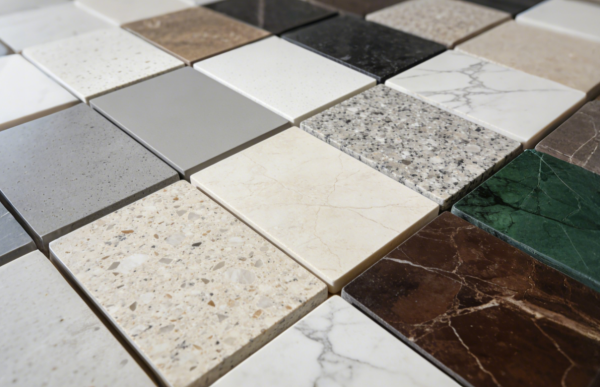
Hard Bond vs Soft Bond Diamond Segments: 5 Key Differences
Here’s a side-by-side view so you can see the contrast at a glance. Use this whenever you’re choosing between hard bond and soft bond diamond segments:
| Feature | Hard Bond Diamond Segment | Soft Bond Diamond Segment |
|---|---|---|
| Holds diamond grit | Tight — grit wears down slowly before releasing | Loose — grit is released early to stay sharp |
| Wear rate | Slow, long life | Fast, shorter life |
| Best for stone type | Hard, dense, low-abrasive stone (granite, quartzite, engineered quartz) | Soft, abrasive stone (marble, limestone, sandstone, terrazzo) |
| Failure if misused | Glazing, polished stone, no cut | Rapid segment wear, lost diamonds |
| Cutting feel | Aggressive but steady; needs more machine power | Sharp “bite” even at low power |
Rule of thumb: Hard stone → hard bond. Soft/abrasive stone → soft bond. When in doubt, ask: “Is the stone hard, or is it abrasive?”
When to Choose Hard Bond Diamond Segments
Pick a hard bond diamond segment when you’re cutting materials that are dense, low-abrasive, and physically hard. A hard bond holds each diamond grain firmly so it can grind through tough stone without flying out.
Typical stones for hard bond:
- Granite — the most common reason shops buy hard bond.
- Quartzite — extremely hard; softer bonds burn out fast.
- Engineered quartz / quartz countertops — very dense, high silica content.
- Hard basalt & dense volcanic rock
- Reinforced concrete with hard aggregate (rebar-heavy panels)

When to Choose Soft Bond Diamond Segments
Pick a soft bond diamond segment for stones that are soft, crumbly, or abrasive. These materials try to pull the diamond grit out of the matrix. A soft bond lets the worn diamond drop away on time so a fresh, sharp crystal is always exposed.
Typical stones for soft bond:
- Marble — soft calcite; a hard bond will glaze instantly.
- Limestone & travertine — very abrasive; needs grit to keep exposing.
- Sandstone
- Terrazzo
- Green concrete (freshly poured) — highly abrasive.
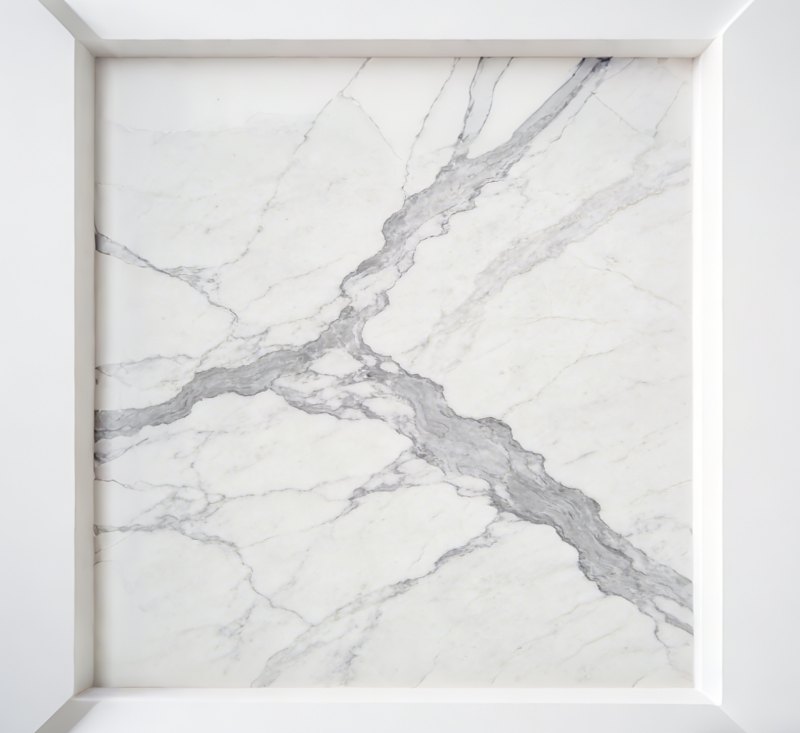
Material Matching Chart: Pick the Right Bond for Your Stone
Bookmark this stone-to-bond chart for your shop. It’s the fastest way to answer “which diamond segment bond do I need?” on the job.
| Stone / Material | Hardness & Abrasiveness | Recommended Bond |
|---|---|---|
| Granite, Quartzite, Engineered Quartz | Hard, dense, low-abrasive | Hard Bond |
| Hard basalt, dense volcanic rock | Hard, dense | Hard Bond |
| Reinforced concrete (hard aggregate) | Hard, abrasive, rebar | Medium–Hard Bond |
| Standard concrete (cured) | Medium-hard, abrasive | Medium Bond |
| Marble, Travertine, Limestone | Soft, highly abrasive | Soft Bond |
| Sandstone, Green concrete | Soft, very abrasive | Soft Bond |
| Terrazzo | Medium-soft, abrasive | Soft Bond |
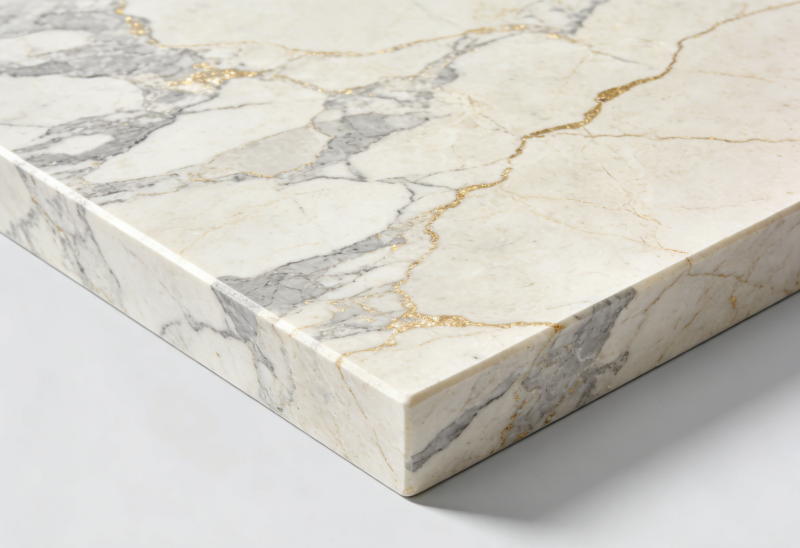
Limestone — soft bond
Highly abrasive calcium-based stone. A soft bond keeps fresh diamond exposed and the cut clean.

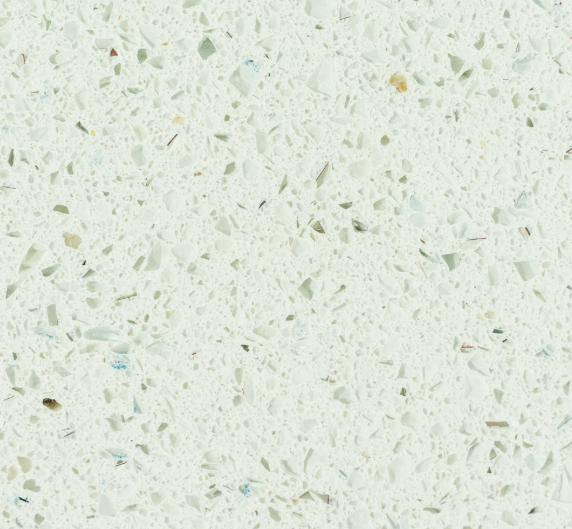
Engineered quartz — hard bond
Very high silica content (often >90%). Dense and unforgiving — only a hard bond keeps up.
Pro Tips: 4 Things That Affect Your Bond Choice
Bond selection isn’t just about stone type. These four working conditions will push you toward a harder or softer bond:
- Cutting speed & machine power. Low-RPM or low-power machines usually want a softer bond so the diamond exposes itself. High-power bridge saws can handle a harder bond without glazing.
- Dry vs. wet cutting. Wet cutting cools the segment — so under wet conditions, go one step softer. Dry cutting needs one step harder to compensate for heat.
- Segment quality & diamond grade. Premium diamond grits stay sharp longer, which lets you run a slightly softer bond for a faster cut.
- Abrasiveness of the stone. Two stones can have the same hardness (Mohs rating) but very different abrasiveness. Abrasiveness — not hardness — is what really kills a bond.

3 Common Mistakes When Choosing a Diamond Segment Bond

FAQ: Hard Bond vs Soft Bond Diamond Segments
What is the difference between hard bond and soft bond diamond segments?
Hard bond holds diamond grains tightly so the segment wears slowly — great for hard, dense stone like granite. Soft bond releases worn diamonds faster so the edge stays sharp — ideal for soft, abrasive stone like marble and limestone.
Which diamond segment bond is best for granite?
Use a hard bond diamond segment for granite. Granite is hard and dense, so the bond must resist wear. Pair it with adequate water cooling and machine power.
Which bond is best for marble?
Use a soft bond diamond segment for marble. Marble is soft, calcite-based, and very abrasive. A hard bond will glaze; a soft bond keeps the diamonds exposed and the cut fast.
Can one diamond blade cut both granite and marble?
Not ideally. A medium bond is a compromise — it works on both but never optimally on either. For professional results, keep a hard-bond blade for granite/ quartzite and a soft-bond blade for marble/ limestone.
How do I know if my bond is wrong?
Glazed segment + shiny stone + slow cut → bond is too hard, go softer.
Segment wears down quickly + you see large diamond pieces falling out → bond is too soft, go harder.
Are Western Land Tools segments available in both bonds?
Yes. We manufacture hard bond diamond segments for granite / quartzite / engineered quartz, and soft bond diamond segments for marble / limestone / sandstone. Custom bonds and diamond grades are available on request.
Conclusion: Match the Bond to the Stone — Not to the Blade
Forget the brand, forget the diameter, forget the price tag. The single biggest factor in diamond segment performance is whether the bond matches the stone.
- Granite, quartzite, engineered quartz, hard basalt → hard bond.
- Marble, limestone, travertine, sandstone, terrazzo, green concrete → soft bond.
- Standard / reinforced concrete → medium bond (medium-hard for rebar-heavy panels).
Choose correctly and you’ll see faster cuts, cleaner edges, and blades that actually last. Choose wrong and you’ll keep blaming the blade — when the bond was the problem all along.
Need help picking the right diamond segment?
Tell us the stone, the machine, and whether you cut wet or dry — we’ll spec the bond for you. Contact Western Land Tools →


